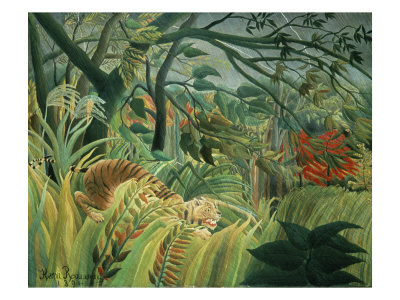
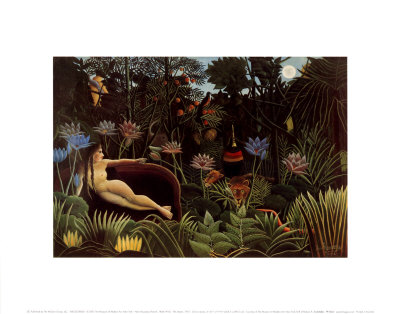
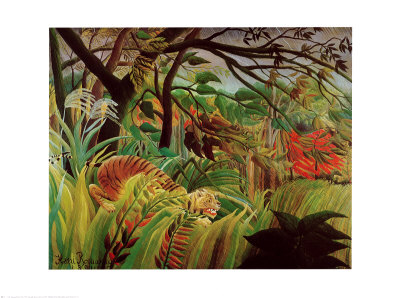
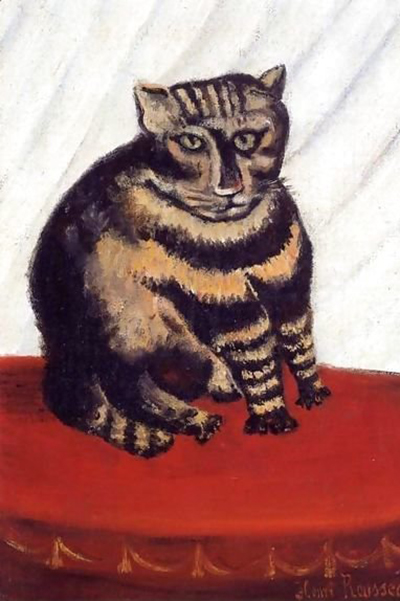
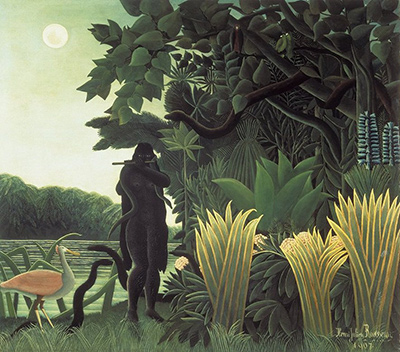
The genius of Henri Rousseau lay not merely in his vibrant color palette or his unique style of naive art, but in his extraordinary ability to merge disparate elements into a single, unified dream world. Many aspiring artists, when attempting to replicate this effect, struggle to make figures feel organically connected to the surrounding landscapes, resulting in compositions that feel disjointed or forced. The challenge lies in treating the human element not as an isolated insertion, but as an intrinsic part of the environment, sharing the same visual rhythm and atmospheric weight as the trees, animals, and skies that define the scene.
Understanding the Illusion of Proximity
The primary hurdle in blending figures with backgrounds is the psychological distance the viewer perceives between the subject and the setting. In naive compositions, where depth cues like linear perspective and atmospheric haze are often simplified, a figure standing abruptly in front of a distant mountain range can look like a cutout pasted onto the canvas. To overcome this, one must abandon the strict rules of academic realism regarding spatial recession and instead rely on visual continuity. The texture of the figure's clothing should echo the texture of the ground beneath them; the shadow cast by the character must align perfectly with the light source established by the sun or moon in the sky. If the figure is depicted as part of the landscape, their form should interact with the environment, perhaps leaning into a tree or casting a shadow that merges with the foliage, ensuring there is no visual "gap" between the subject and the world they inhabit.
Harmonizing Color and Light
Color theory serves as the most powerful tool for unifying disparate planes in a painting. When a figure stands against a complex background of foliage and sky, their colors must be carefully selected to either harmonize with or intentionally contrast in a way that feels natural to the artist's specific vision. A common error is using a flat, studio-like skin tone that clashes with the warm, earthy, or cool, misty hues of the naive landscape. Instead, artists should desaturate the figure's colors slightly or mix them with the dominant palette of the scene. If the landscape is bathed in a golden hour glow, the figure's edges should shimmer with similar reflected light. Conversely, if the background is a deep, dark jungle, the figure might benefit from a slightly cooler, shadowed tone that suggests they are tucked within the darkness rather than floating above it. The light source must be consistent; every element, from the tips of the leaves to the folds of a dress, must catch the light in the same manner, reinforcing the single, cohesive reality of the artwork.
The Role of Composition and Negative Space
Beyond color and light, the arrangement of shapes within the canvas plays a critical role in binding the figure to the landscape. In naive art, composition is often more intuitive and less grid-based than in academic traditions, which can sometimes lead to figures appearing to float in open space. To prevent this, artists should utilize negative space strategically. The empty areas around a figure should not be merely voids but should be filled with contextual details that guide the eye toward the character. If a figure is placed near the center, the surrounding space should contain elements that frame them, such as a large tree trunk or a cluster of flowers, creating a visual enclosure. Furthermore, the directionality of the composition matters; if the figure is facing a specific direction, the background should offer a focal point or a path that leads the eye in that same direction, creating a narrative flow that connects the character to their surroundings. This ensures the figure feels like a destination or a guide within the story of the painting rather than a static object placed there for decoration.
Practical Techniques for Seamless Integration
Implementing these principles requires deliberate technique during the application of paint and the manipulation of brushstrokes. One effective method is to "paint into" the figure rather than painting the figure onto the background. By applying the base layers of the landscape first and then building up the figure's form from within that context, the boundaries between the two become porous and interwoven. Additionally, the texture of the brushwork should vary; rough, energetic strokes for the foliage might be softened by smoother, more fluid strokes for the skin, yet the direction of the strokes should still flow naturally across the transition point. Artists should also consider the edge quality of the figure; soft, blended edges can suggest integration, while hard, crisp lines can indicate separation. By consciously managing these transitions, the artist can create a composition where the figure and the landscape exist in a dynamic, breathing relationship, true to the spirit of the naive style.
Finally, remember that the goal is emotional coherence, not just technical accuracy. The figure must evoke a feeling that matches the mood of the landscape. Whether the scene is serene, mysterious, or bustling, the character's posture, expression, and interaction with the environment should reinforce that specific atmosphere. By focusing on these interconnected elements, artists can successfully blend figures and landscapes, creating compositions that feel complete, immersive, and effortlessly cohesive.
To truly master this fusion, consider the following checklist during your painting process:
- Ensure the brushstrokes used for the human skin flow in the same direction as the nearby grass or leaves.
- Check that the shadow cast by the figure's limb aligns with the direction of the light in the sky.
- Verify that no part of the figure stands out with a color intensity that exceeds the background saturation.
- Make sure the negative space surrounding the figure contains subtle textures that echo the foreground.
- Ask yourself if the figure feels like it belongs in the jungle, or if it looks like a visitor in a foreign land.
- Review the edge definition; are the boundaries too sharp and rigid between character and nature?
- Confirm that the emotional tone of the person matches the atmospheric mood of the surrounding scenery.